
Ethos Lifetime Deal
Ethos on AppSumo: $116 one-time for Enterprise lifetime access (78% off $55/month regular price), 60-day AppSumo money-back guarantee. No verified coupon codes currently available for Ethos.
- Type Lifetime
- Verdict Wait
- Status Active
- Updated Jun 9, 2026
- Confidence Medium
- Score 5/10
Verdict: Wait
Ethos's $116 Enterprise lifetime deal is priced exceptionally well against a $55/month regular subscription, but documented performance issues, locked template sections, absent third-party integrations, and an undocumented update policy for lifetime buyers create enough accumulated uncertainty that waiting for clearer guarantees or stability improvements is the more prudent choice than committing now.
On this page7 sections
What is Ethos?
Ethos is a cloud-based brand guidelines and digital asset management platform for teams centralizing logos, style guides, and creative assets in one searchable location. Ethos on AppSumo: $116 one-time for Enterprise lifetime access (78% off $55/month regular price), 60-day AppSumo money-back guarantee. No verified coupon codes currently available for Ethos.
The Ethos lifetime deal on AppSumo costs $116 one-time for Enterprise access to a brand guidelines and digital asset management platform that would otherwise cost $55 per month on a regular subscription, paying for itself in roughly two billing cycles. That price point is one of the more compelling offers in the brand management category, particularly for freelancers and small agencies that need centralized brand asset storage without enterprise-level pricing. However, Ethos carries documented limitations that matter for longer-term use: multiple independent reviewers on both AppSumo and Capterra report slow loading times and intermittent bugs that interrupt daily workflow. The template system further constrains design flexibility, with pre-existing sections locked in place due to a confirmed database architecture limitation, and no integrations with Zapier, Slack, or Adobe Creative Suite are documented anywhere in official materials or user reviews. Frontify, the closest mid-market alternative, starts at $1,200 per year and delivers an interactive stakeholder brand portal plus confirmed integrations that Ethos currently does not offer. The most significant open question for lifetime buyers is whether future product updates are included in the one-time AppSumo purchase: Ethos does not explicitly state this, and no public product roadmap exists to assess development momentum or planned improvements to the platform's confirmed gaps.
Pros & Cons
Pros
- Enterprise lifetime access at $116 one-time replaces a $55/month recurring subscription, paying for itself in approximately two billing cycles. The AppSumo 60-day money-back guarantee provides a practical low-risk window for real evaluation before fully committing.
- Centralized shareable brand guideline pages work effectively for freelancers and agencies handing off brand assets to clients or contractors who need read access without requiring paid platform seats or direct account logins.
- 4.36 out of 5 on AppSumo across 45 verified reviews indicates a meaningful user base that finds the core brand guidelines and DAM functionality genuinely useful for real-world brand management. 4.8 on GetApp across 25 reviews reinforces this baseline satisfaction.
- Localization support allows teams managing brand identity across multiple regions or markets to maintain separate localized brand guideline versions within a single Ethos account, a feature confirmed in available documentation.
- Auto-upgrade policy provides a clear path to unlimited guidelines: users on lower tiers who exceed 10 brand guidelines can email Ethos directly for a free upgrade to Enterprise, removing the hard cap without requiring an additional purchase.
Cons
- Slow loading times and platform glitches appear consistently across both AppSumo and Capterra reviews from multiple independent users. The platform is described as 'buggy and slow' with processing delays that interrupt workflow sessions in daily use.
- Pre-built template sections cannot be rearranged due to a confirmed database architecture constraint, noted explicitly by Capterra reviewers. Only manually added sections are movable, severely limiting layout customization compared to what Frontify and Bynder allow.
- No confirmed integrations with Zapier, Slack, Notion, or Adobe Creative Suite exist in any official documentation or user review source. This is a significant gap for design and marketing teams whose workflows depend on connected toolchains.
- The lifetime deal update policy is undocumented. Whether future feature releases are included in the one-time $116 payment is unconfirmed, at least one AppSumo reviewer questioned update frequency, and no public product roadmap exists to evaluate the development trajectory.
- Customer support responsiveness is inconsistent across multiple independent review sources. Both Capterra and AppSumo reviewers report slow or unresponsive interactions, which compounds existing usability issues when performance problems or template bugs require resolution.
What It Does
- Creates shareable brand guideline web pages with pre-built templates
- Stores logos, color palettes, and brand assets in one searchable location
- Controls user permissions and access for team collaboration
- Monitors brand compliance across marketing and sales channels
- Provides AI tools for revising and updating brand messaging over time
- Supports localization of brand guidelines for different regional markets
Who It's For
- Freelancers and designers managing multiple client brand identities on a tight budget
- Small marketing teams needing centralized brand asset storage without enterprise-level pricing
- Agencies building brand guideline documents for clients who need shareable deliverables
- Startups establishing brand identity for the first time without a large software budget
Pricing Comparison
| Plan | Price | Type |
|---|---|---|
| Ethos Enterprise (AppSumo) | $116 one-time | ⭐ Best Value |
| Ethos Agency (AppSumo) | $87 one-time | Lifetime Deal |
| Ethos Premium (AppSumo) | $58 one-time | Lifetime Deal |
| Ethos Standard (AppSumo) | $29 one-time | Lifetime Deal |
| Ethos Enterprise (Regular) | $55/month | Subscription |
| Frontify Essentials | $1,200+/year | Subscription |
| Bynder Entry-Level | ~$450/month+ | Subscription |
| Brandfolder | Check pricing > | Subscription |
Feature Comparison
| Feature | Ethos | Frontify | Bynder |
|---|---|---|---|
| Brand guideline templates | ✅ | ✅ | ✅ |
| Digital asset management (DAM) | ✅ | ✅ | ✅ |
| Shareable guideline links | ✅ | ✅ | ✅ |
| User permission controls | ✅ | ✅ | ✅ |
| Localization support | ✅ | ✅ | ✅ |
| Lifetime deal pricing option | ✅ | ❌ | ❌ |
| AI auto-tagging for uploaded assets | ❌ | ❓ | ✅ |
| Interactive brand portal for stakeholders | ❌ | ✅ | ❌ |
| Asset performance and usage analytics | ❌ | ❓ | ✅ |
| Rearrangeable template and guideline sections | ❌ | ✅ | ✅ |
| Third-party app integrations (Zapier, Slack, Adobe) | ❌ | ✅ | ✅ |
Limitations
- Speed and performance are the most consistently cited problems: multiple independent reviewers on AppSumo and Capterra describe the platform as 'buggy and slow,' with loading delays and intermittent glitches that interrupt active workflows. This pattern appears across at least four separate reviews, making it a systemic issue rather than an isolated report (source: AppSumo reviews, Capterra reviews).
- Pre-existing template sections cannot be rearranged due to a confirmed database architecture decision. Capterra reviewers explicitly note that only manually added sections can be reordered; all pre-built template structures are locked in their default positions. This significantly constrains layout flexibility compared to Frontify, which allows fully rearrangeable guideline sections (source: Capterra reviews).
- No confirmed third-party integrations exist for Zapier, Slack, Notion, or Adobe Creative Suite. These connections do not appear in Ethos's feature documentation, official marketing materials, or any user review. For design and marketing teams with existing tool stacks, this is a meaningful workflow gap with no workaround currently available (source: Capterra reviews, research findings).
- Customer support responsiveness is inconsistent across multiple independent sources. Both AppSumo and Capterra reviewers flag slow or unresponsive support interactions as a recurring frustration. When performance bugs or template issues arise, inconsistent support compounds the friction and extends resolution time (source: AppSumo reviews, Capterra reviews).
- The update policy for lifetime deal buyers is not documented anywhere in Ethos's official materials. Whether future platform features are included in the one-time AppSumo purchase is unconfirmed. One AppSumo reviewer specifically expressed concern, noting they 'naturally hoped it would be updated,' suggesting perceived low update velocity. This ambiguity is a real long-term risk for a multi-year ownership horizon (source: AppSumo reviews, lifetimo.com).
- No public product roadmap has been found in any documentation or linked resource from Ethos. Without a visible roadmap, buyers have no way to assess whether documented gaps in performance, integrations, or template flexibility are being actively worked on or scheduled for release (source: research findings, no roadmap URL found in any search result).
- Template options are described as 'clunky' by Capterra reviewers, with redundant file type specifications and friction during configuration. Users who require fine-grained control over brand guideline presentation will encounter limits quickly, as the platform's customization options are restricted beyond what the pre-built template structures allow (source: Capterra reviews).
- The auto-upgrade path for exceeding the brand guidelines cap introduces process friction on lower tiers. Users who hit 10 brand guidelines on Standard or Premium plans must manually email Ethos support to request a free Enterprise upgrade. This workflow depends directly on support responsiveness, which multiple reviewers have already flagged as unreliable (source: lifetimo.com, AppSumo reviews).
What's Missing vs Competitors
- Bynder offers advanced AI-powered auto-tagging that automatically categorizes and organizes uploaded assets by content type. Ethos has no confirmed auto-tagging capability, requiring teams to manually organize all assets in the DAM.
- Frontify includes an interactive brand portal designed for regional marketers and external sales teams to self-serve approved brand materials without needing platform credentials. Ethos provides shareable links but lacks a structured stakeholder-facing self-service portal experience.
- Bynder's analytics module tracks how brand assets are accessed, used, and distributed across teams and channels. Ethos has no confirmed asset performance analytics, leaving brand managers without data on which materials are actually adopted versus ignored.
- Frontify and Bynder both support fully rearrangeable template and guideline sections, giving brand managers flexible layout control. Ethos locks its pre-built template sections in place due to a confirmed database architecture constraint, which Capterra reviewers note prevents customization of pre-existing structures.
- Both Frontify and Bynder provide documented ecosystems of third-party integrations covering common marketing and creative tools. Ethos has no confirmed integration layer, creating a hard workflow gap for teams relying on Zapier, Slack, or Adobe Creative Suite in their day-to-day operations.
Who Should Skip This Deal
- Teams already using Frontify or Bynder for brand management should skip Ethos. The feature depth, stakeholder portal, confirmed integration ecosystem, and enterprise-grade workflows of both platforms justify their higher costs for mid-to-large organizations with complex brand governance requirements.
- Marketing and design teams that depend on Zapier automations, Slack notifications, or Adobe Creative Suite connections should skip Ethos. No integrations with these tools are confirmed in any documentation, and Frontify covers this gap despite its higher annual cost.
- Organizations expecting guaranteed long-term product updates, a visible roadmap, or formal SLAs should skip Ethos or wait for explicit update terms. Bynder and Frontify provide contractual roadmaps and support agreements for their enterprise contracts. Ethos offers neither for lifetime buyers.
- Power users needing version history, asset change tracking, audit logs, or detailed asset usage analytics should look elsewhere. Frontify and Bynder both support version control and analytics features that Ethos does not confirm in its current documented feature set.
Frequently Asked Questions
- At $116 one-time for the Enterprise tier versus a $55 per month regular subscription, Ethos offers an attractive price-to-access ratio for teams specifically needing brand guidelines and digital asset management in one platform. The deal pays for itself in approximately two billing cycles, and AppSumo's 60-day money-back guarantee lets you test the platform with minimal financial risk before fully committing. That said, the value calculation depends heavily on what you need long-term. Ethos has documented performance issues including slow loading and intermittent bugs confirmed across multiple independent reviews on AppSumo and Capterra. It lacks confirmed integrations with Zapier, Slack, or Adobe Creative Suite, which limits how well it fits existing workflows. The unclear update policy for lifetime buyers is the most significant uncertainty: if Ethos stops releasing updates to lifetime plan holders within a few years, you could be left on a stagnant version with no recourse. For basic brand guidelines hosting and centralized asset storage with no complex integration requirements, the $116 price is hard to argue with. For teams expecting ongoing feature growth or deep tool integration, the case weakens considerably.
- The Ethos AppSumo lifetime deal includes a 60-day money-back guarantee, which is AppSumo's standard refund window applied uniformly across all lifetime deals on the platform. This gives you approximately two months to evaluate the platform against real workflows before the purchase becomes final. The refund is processed through AppSumo directly rather than through Ethos's own billing system. Note that this guarantee applies specifically to the AppSumo purchase; regular subscription plans on Ethos's own website may carry different refund terms that are not documented in publicly available research. The 60-day window is sufficient time to create several brand guideline pages, test the asset upload and organization workflow, assess loading speed under realistic conditions, and determine whether the template section limitations are tolerable for your team's needs. If performance issues, missing integrations, or the template rigidity turn out to be blocking problems for your specific workflow, the refund window provides a meaningful safety net that makes the initial purchase low-risk.
- Ethos and Frontify both address brand consistency management, but they target meaningfully different market segments and price points. Frontify Essentials starts at $1,200 to $1,800 per year for three to five users, while Ethos Enterprise costs $116 one-time. That represents roughly a 10x to 15x price difference in the first year, which is the single strongest argument for Ethos among smaller teams and budget-constrained buyers. On features, Frontify wins on several confirmed dimensions. Frontify includes an interactive brand portal designed for regional marketers and external sales teams to self-serve approved assets without needing platform credentials. It offers documented integrations with common marketing tools, fully rearrangeable brand guideline sections, and a public pricing page with a visible product roadmap. Ethos's template sections are locked once set, which Capterra reviewers confirmed is a database architecture constraint rather than a user-configurable setting. Frontify also provides greater transparency about what you are buying long-term. For freelancers and very small agencies, the Ethos price gap is significant enough to justify tolerating its current limitations. For marketing teams that need a stakeholder-facing portal, rich third-party integrations, or flexible template layouts, Frontify's feature set justifies the premium despite the much higher annual cost.
- Ethos has several limitations documented consistently across AppSumo and Capterra reviews from multiple independent users. The most frequently cited issue is performance: slow loading times and intermittent bugs that disrupt day-to-day workflow appear in at least four separate reviews across two platforms, making this a systemic concern rather than an outlier complaint. The second major constraint is the template system: pre-existing template sections cannot be rearranged due to a confirmed database architecture decision, meaning only manually added sections are movable. Frontify and Bynder do not carry this constraint. Third, Ethos has no confirmed third-party integrations with Zapier, Slack, Notion, or Adobe Creative Suite, which is a meaningful gap for design and marketing teams with existing connected workflows. Customer support responsiveness is flagged as inconsistent in at least two independent review sources on different platforms. The most significant longer-term risk is the undocumented update policy: Ethos does not confirm that lifetime deal buyers receive future product updates, and no public roadmap exists to evaluate development trajectory or assess whether the current gaps are scheduled for improvement.
- Organizations that depend on tightly integrated marketing and design tool stacks should avoid Ethos. With no confirmed Zapier, Slack, or Adobe Creative Suite integrations, teams that automate asset distribution or connect creative tools to their DAM will find Ethos isolated from their existing workflows, and Frontify is a better fit despite its significantly higher annual cost. Mid-sized and enterprise teams that need a stakeholder-facing brand portal for regional marketers and external sales teams will be underserved: Ethos provides shareable links but not the interactive self-service portal experience that Frontify delivers. Teams with long planning horizons requiring guaranteed software updates and a public product roadmap should skip Ethos or wait for explicit update commitments. The update policy for Ethos lifetime buyers is not documented, and without a visible roadmap there is no basis for assessing future development priorities. Finally, power users needing version history, asset change tracking, audit logs, or detailed asset usage analytics should consider Bynder or Brandfolder instead, as Ethos does not confirm any of these capabilities in its current feature documentation.
Is Ethos worth the money?
What is the refund policy for Ethos?
How does Ethos compare to Frontify?
What are the main limitations of Ethos?
Who should NOT buy Ethos?
Sources
Get notified when the verdict changes
This deal currently has a "Wait" verdict. If pricing improves, limitations are fixed, or the verdict changes to Buy, we will email you.
We only email you about this specific deal. Unsubscribe anytime.
Related tools & guides
Alternatives to Ethos
Other active deals in AI Marketing
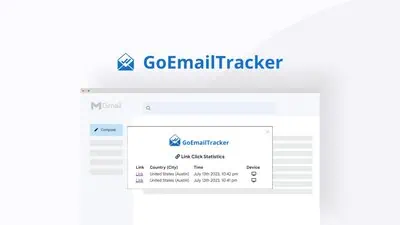
GoEmailTracker is a Gmail and Google Workspace browser extension that tracks email opens, link clicks, and rec...
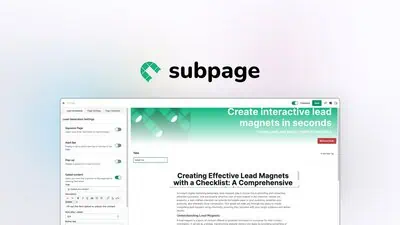
Subpage is a no-code tool for building, gating, and collecting leads from interactive content-led lead magnet ...
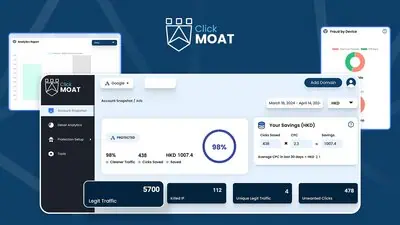
ClickMoat is an AI click fraud protection tool that detects and blocks fraudulent and bot clicks on Google Ads...
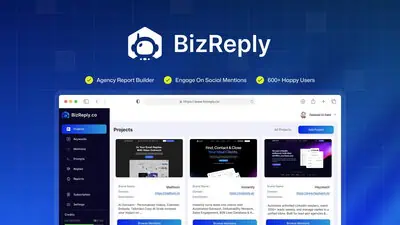
BizReply is an AI social listening tool that finds posts matching your keywords and drafts brand-mention repli...
Comments
Loading comments...