
Teable Lifetime Deal
Teable AppSumo lifetime deal from $69 one-time (3 seats, Tier 1) to $549 one-time (50 seats, Tier 4). No stacking. 60-day refund via AppSumo. Future Pro or Business plan updates included by tier.
- Type Lifetime
- Verdict Wait
- Status Active
- Updated Jun 8, 2026
- Confidence Medium
- Score 5/10
Verdict: Wait
Teable's $69 entry price and PostgreSQL backbone make it compelling for small teams, but unpredictable credit consumption with no usage warnings, documented App Builder instability, no Timeline view, missing BYOK for App Builder, and no confirmed EU data residency mean the product needs another development cycle before earning a confident recommendation.
On this page7 sections
What is Teable?
Teable is an AI-native database platform built on PostgreSQL that lets teams build databases, automations, and web apps through natural language without coding. Teable AppSumo lifetime deal from $69 one-time (3 seats, Tier 1) to $549 one-time (50 seats, Tier 4). No stacking. 60-day refund via AppSumo. Future Pro or Business plan updates included by tier.
Teable's AppSumo lifetime deal offers a PostgreSQL-backed AI database platform starting at $69 one-time for three seats, replacing what would cost $360 per year on a standard Pro subscription. The tool combines a no-code database interface with an AI Chat layer that lets users query, build apps, and automate workflows through natural language. However, credit consumption is the biggest documented issue: multiple AppSumo buyers report burning through a full month of credits in two evenings of data work, with no usage warnings before lockout, and App Builder does not yet support Bring Your Own Key to control those costs. Airtable remains the category leader and offers a Timeline view, Gantt view, and a native chart system that does not consume usage credits, none of which Teable currently provides. Teable's strongest argument is price: a five-person team pays $169 one-time here versus $1,200 per year for five Airtable Team seats, and the 60-day refund window means Tier 1 at $69 carries minimal financial risk. The AI efficiency improvements rolled out in 2026, including automations that no longer consume credits, signal active development, but the product is young and key gaps including App Builder stability, BYOK for App Builder, and EU data hosting remain unresolved.
Pros & Cons
Pros
- PostgreSQL real relational backend provides genuine database capability. Unlike spreadsheet-simulating tools, Teable stores data in actual Postgres, enabling complex queries, foreign key relationships, and data integrity constraints at scale without additional database configuration.
- AppSumo entry price of $69 one-time represents strong value. Tier 1 replaces a $360/year subscription, and Tier 2 at $169 one-time covers five seats versus $1,200/year for comparable Airtable Team access at the same headcount.
- 60-day AppSumo refund policy makes the Tier 1 purchase low-risk. Buyers can test AI Chat, App Builder, automations, and core database features within the full trial window before committing to a higher tier or walking away.
- Active development cadence with weekly changelog updates as of June 2026. Teable has already fixed a major early complaint: workflow automations no longer consume monthly credits, addressing the top pain point reported by early AppSumo buyers.
- ISO 9001 and ISO 27001 certifications plus open-source Community Edition on AGPL license. Self-hosting via Docker is supported, and the compliance certifications provide a trust baseline that not all no-code database competitors can match.
Cons
- Monthly credit pool is insufficient for intensive AI use. Multiple AppSumo reviewers burned through Tier 4's 18,000-credit upfront allocation in two evenings. There are no milestone warnings, so users get locked out of AI features without advance notice in the middle of active work.
- App Builder stability issues are documented on AppSumo. At least one Tier 4 buyer reported their app crashing at version 119 with complete work loss and no error details, indicating the App Builder is not yet production-grade for mission-critical or client-facing workflows.
- No Timeline or Gantt view exists in any tier. This is a standard feature in both Airtable and NocoDB. Teams managing project schedules, resource allocation, or phase dependencies must use a separate project management tool alongside Teable.
- App Builder does not support BYOK to reduce credit consumption. Field-level AI supports your own API keys, but every App Builder generation draws from the platform's monthly credit pool regardless of tier, making cost control impossible for App Builder-heavy users.
- No stacking available on AppSumo. You must choose the correct tier at purchase and cannot add codes later to increase limits. If you underestimate your usage, upgrading requires purchasing the deal again at a higher tier while it remains available.
What It Does
- Stores relational data in a real PostgreSQL backend with foreign key support
- Generates live web apps via AI App Builder using natural language prompts
- Runs per-cell AI operations including auto-tagging, classification, and summarization
- Automates workflows with trigger-based rules that no longer consume monthly credits
- Provides AI Chat interface to query and manage database records conversationally
- Supports custom domain, SSO, and granular authority matrix on all AppSumo tiers
Who It's For
- Small teams replacing Airtable who need a PostgreSQL-backed no-code database at a one-time price
- Developers building internal tools who want real relational data behind a visual interface
- Startups and agencies using AI to automate data workflows and generate client-facing apps
- Operations teams managing large datasets that benefit from genuine relational database constraints
Pricing Comparison
| Plan | Price | Type |
|---|---|---|
| Teable Tier 1 AppSumo (3 seats) | $69 one-time | ⭐ Best Value |
| Teable Tier 2 AppSumo (5 seats) | $169 one-time | Lifetime Deal |
| Teable Tier 3 AppSumo (10 seats) | $329 one-time | Lifetime Deal |
| Teable Tier 4 AppSumo (50 seats) | $549 one-time | Lifetime Deal |
| Teable Pro Plan (regular pricing) | $10/seat/month (annual) | Subscription |
| Airtable Team | $20/user/month (annual) | Subscription |
| NocoDB Cloud Plus | $12/seat/month (annual) | Subscription |
| Baserow Premium | $10/user/month (annual) | Subscription |
Feature Comparison
| Feature | Teable | Airtable | NocoDB |
|---|---|---|---|
| AI Chat for database queries | ✅ | ❌ | ❌ |
| AI App Builder via natural language | ✅ | ❌ | ❌ |
| PostgreSQL real relational backend | ✅ | ❌ | ✅ |
| Timeline / Gantt view | ❌ | ✅ | ✅ |
| Native chart builder without credits | ❌ | ✅ | ❌ |
| Connect to external existing databases | ❌ | ❌ | ✅ |
| BYOK for AI field-level operations | ✅ | ❌ | ❌ |
| SSO included at entry-level price | ✅ | ❌ | ❌ |
| Open-source self-hosting option | ✅ | ❌ | ✅ |
| Workflow automations included | ✅ | ✅ | ✅ |
Limitations
- Monthly AI credits burn faster than the allocation suggests for intensive use. AppSumo reviewers documented burning through Tier 4's 18,000-credit pool (including the upfront bonus) in two evenings of data cleanup work. Teable provides no usage warnings at 25%, 50%, or 75% milestones, meaning users discover they are locked out of AI features only after hitting zero. Source: multiple AppSumo reviews.
- App Builder does not support Bring Your Own Key. Field-level AI supports BYOK with OpenAI, Anthropic, or DeepSeek, but every App Builder generation draws from the platform credit pool regardless of tier. There is no way to route App Builder calls through a personal API key to control costs independently. Source: confirmed in AppSumo FAQ section.
- No Timeline or Gantt view exists in any tier. Teable's views are limited to Grid, Kanban, Gallery, Calendar, and Form. Both Airtable and NocoDB include Timeline views for project scheduling. Teams managing phase dependencies, resource timelines, or multi-step project plans must use a separate tool entirely. Source: official Teable pricing page and competitor documentation.
- App Builder stability issues are documented on AppSumo. At least one Tier 4 buyer reported the App Builder crashing at version 119 with complete work loss and no error details provided. Apps built over multiple working days became unusable, prompting a full refund request. This suggests the App Builder is not yet production-grade for mission-critical workflows. Source: AppSumo community Q&A thread.
- Self-hosted AI Chat and App Builder depend on Vercel as an external service dependency. Docker deployment covers the database layer, but AI features require an outbound Vercel connection and are not fully self-contained. Teams pursuing air-gapped on-premise deployments for data sovereignty cannot run AI features without this external dependency. Source: Teable official admin AI settings documentation.
- No confirmed EU data residency option. Teable holds ISO 27001 certification but does not publicly document EU-based server locations. The company was founded in Shenzhen, China in 2022. Several AppSumo buyers raised GDPR concerns without receiving a confirmed EU hosting answer from the team. Competitor Baserow explicitly offers GDPR-compliant EU-hosted storage. Source: AppSumo reviews and Teable public documentation.
- Feature tier mapping changed after some users had already purchased. At least one buyer reported that Custom Domain access, initially indicated at a lower tier, was moved to a higher tier post-purchase. With no stacking available and the deal sold out at the time, no upgrade path existed. Source: AppSumo community Q&A, raising questions about feature-tier stability during the early deal phase.
- Building dashboards, pivot tables, and analytics reports requires AI credit expenditure. Teable lacks a standalone credit-free chart or reporting builder. Every analytics task draws from the monthly credit pool. Airtable includes native chart blocks that do not consume usage credits. Teams needing frequent reporting will exhaust credits faster than the monthly allocation allows. Source: AppSumo reviewer analysis.
What's Missing vs Competitors
- Timeline and Gantt views: both Airtable and NocoDB include Timeline views for scheduling and project management. Teable has no equivalent view type, forcing teams with date-based planning or dependency tracking to use a separate project management tool alongside Teable.
- Credit-free native chart builder: Airtable includes built-in chart blocks and summary reporting without consuming usage credits. Every reporting or analytics task in Teable draws from the monthly AI credit pool, making high-frequency data analysis more expensive over time.
- Connecting to external existing databases as live sources: NocoDB can attach directly to existing MySQL, PostgreSQL, and SQLite instances as external data sources. Teable manages its own PostgreSQL instance but does not offer a connector to pre-existing external databases, limiting migration and hybrid-database workflows.
- GDPR-aligned EU data hosting: Baserow explicitly provides GDPR-compliant EU-based hosting and HIPAA compliance options. Teable provides no confirmed EU data residency, making it unsuitable for European teams with strict regulatory data sovereignty requirements.
- Large native integration marketplace: Airtable's app marketplace offers over 1,000 pre-built integrations with third-party tools. Teable supports webhooks and a REST API but lacks a comparable native connector library, requiring more custom setup work for common third-party integrations.
Who Should Skip This Deal
- EU and GDPR-focused teams should choose Baserow instead. Baserow explicitly offers GDPR-compliant EU-hosted data storage and HIPAA compliance, while Teable has no confirmed EU data residency and is a China-founded company with ISO 27001 certification but no documented regional server choices.
- Teams that need a Timeline or Gantt view for project management should evaluate Airtable or NocoDB before buying. Teable has no Timeline view in any tier, and teams managing schedules, phase dependencies, or multi-stage project plans will find this a hard workflow blocker.
- Heavy AI users who plan to run daily App Builder generation or large-scale batch AI field operations will exhaust monthly credits quickly and cannot use BYOK to reduce App Builder costs. NocoDB's self-hosted free tier has no credit system and suits data-heavy teams with no AI requirement.
- Large enterprises with deep third-party integration needs should evaluate Airtable first. Airtable's 1,000-plus native marketplace integrations and mature REST API ecosystem are better suited to enterprise tool stacks than Teable's smaller native connector catalog.
Frequently Asked Questions
- For small teams replacing Airtable, Teable at $69 to $169 one-time represents genuine value against $240 to $1,200 per year in comparable Airtable subscription costs. The PostgreSQL backend is a real differentiator, providing foreign key relationships and data integrity that spreadsheet-simulating tools cannot match. However, the credit model is the main caveat: AI operations consume a monthly pool, and AppSumo reviewers have reported burning through allocations far faster than expected, with no milestone warnings before lockout. For light to moderate database use with occasional AI queries, the value case is solid. For heavy daily AI users and App Builder power users, the credit constraints are likely to become a repeated frustration, especially since BYOK is not yet supported for App Builder. The 60-day refund policy through AppSumo makes testing at Tier 1 low-risk, which is the most practical recommendation: start at $69, verify your actual credit consumption rate over several weeks, and then decide whether to stay, upgrade, or request a refund.
- AppSumo provides a 60-day money-back guarantee for all Teable lifetime deal purchases. Within that window you can request a downgrade to a lower tier, and upgrades to a higher tier are available at any time while the deal remains live. You must activate your license within 60 days of purchase or it expires. One important caveat: the upfront bonus credits provided at signup (a two-month top-up that does not reset monthly) are consumed and not restored if you refund and repurchase. There is no stacking option on this deal, so you cannot combine multiple codes to increase limits. Teable does not appear to offer a separate direct refund policy independent of AppSumo's guarantee for this lifetime deal. The 60-day window is effectively a paid trial period: you have two full months to test AI Chat, App Builder, automations, and your real-world credit consumption rate before the refund option expires.
- Teable's PostgreSQL backend is the clearest technical differentiator. It provides genuine relational data management including foreign keys, constraints, and complex query support, while Airtable uses a proprietary storage layer that simulates relational behavior without a true relational engine underneath. On pricing, Teable wins decisively: five Airtable Team seats cost $1,200 per year versus $169 one-time for Teable's five-seat AppSumo tier. Teable also includes SSO and a granular authority matrix at Tier 1, which Airtable reserves for its Business plan at $45 per user per month. However, Airtable holds meaningful functional advantages. It includes Timeline and Gantt views that Teable lacks in every tier. Airtable's native chart and reporting tools do not consume usage credits at all. Airtable's marketplace has over 1,000 native integrations versus Teable's smaller connector catalog. For teams prioritizing cost savings and PostgreSQL data integrity, Teable is the stronger pick. For teams that need timeline management, native reporting without credit costs, or a mature third-party integration ecosystem, Airtable remains the better fit despite its higher subscription price.
- The credit system is Teable's most significant practical limitation. Monthly AI credits are consumed by AI Fields, App Builder generation, and AI Chat queries. AppSumo reviewers documented burning through six months worth of credits in two evenings of intensive data cleanup work, and Teable provides no usage warnings at any threshold, leaving users locked out without advance notice. App Builder does not support BYOK, meaning you cannot route generation calls through your own OpenAI or Anthropic key to reduce platform credit spend. Teable has no Timeline or Gantt view in any tier, which both Airtable and NocoDB offer. The App Builder has verified stability issues, with at least one confirmed report of complete data loss after a version crash, indicating it is not yet production-grade. For self-hosted deployments, AI Chat and App Builder require Vercel as an external dependency, making truly air-gapped on-premise AI impossible. There is also no confirmed EU data residency option, which blocks adoption by European teams with GDPR data sovereignty requirements. The company was founded in 2022, so overall product maturity is still developing across several feature areas.
- EU and GDPR-focused teams should skip Teable in favor of Baserow, which explicitly offers GDPR-compliant EU-hosted data storage. Teable is ISO 27001 certified but has not confirmed EU data residency, and the company is China-founded with no documented regional server options for European buyers. Teams that depend on a Timeline or Gantt view for project management should evaluate Airtable or NocoDB first, since this view type is entirely absent from Teable at every pricing tier and there is no announced timeline for adding it. Power users who plan to build dozens of AI-generated apps daily or run heavy batch AI field operations will exhaust monthly credits quickly and will hit a hard wall since BYOK is not supported for App Builder. Teams needing a deep native integration library for connecting to CRM, ERP, or marketing platforms should look at Airtable, which offers over 1,000 marketplace integrations compared to Teable's smaller connector catalog. Self-hosting teams that require fully on-premise AI with zero external service dependencies should know that AI Chat and App Builder both rely on Vercel even in Docker-based self-hosted deployments.
Is Teable worth the money?
What is the refund policy for Teable?
How does Teable compare to Airtable?
What are the main limitations of Teable?
Who should NOT buy Teable?
Sources
Get notified when the verdict changes
This deal currently has a "Wait" verdict. If pricing improves, limitations are fixed, or the verdict changes to Buy, we will email you.
We only email you about this specific deal. Unsubscribe anytime.
Related tools & guides
Alternatives to Teable
Other active deals in AI Productivity

XInterview AI is an asynchronous video interviewing platform that lets recruiters send candidates pre-set ques...
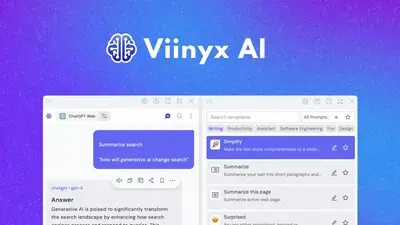
Viinyx is an all-in-one AI browser extension for Chrome and Edge that puts multiple AI models, page and video ...
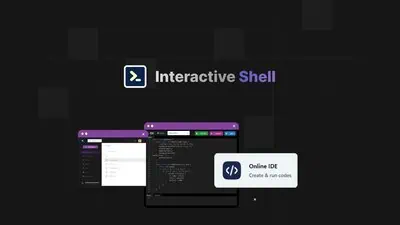
Interactive Shell is a browser-based DevOps terminal and AI code IDE that gives instant Linux and Windows web ...
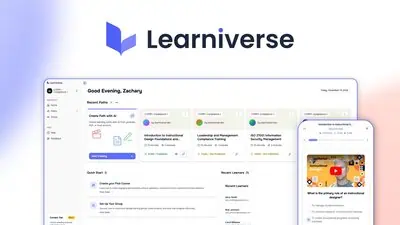
Learniverse is an AI eLearning platform that turns PDFs, URLs, or short text prompts into interactive courses,...
Comments
Loading comments...